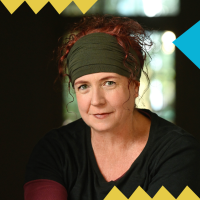
Lliane Loots is a Lecturer in the Drama and Performance Studies Programme at the University of KwaZulu-Natal. She completed her PhD in 2018 looking at contemporary dance/performance histories on the African continent. Loots holds the founding position of Artistic Director/Curator for UKZN’s Centre for Creative Arts’s annual international JOMBA! Contemporary Dance Experience – a festival that turns 26 in 2024. Loots founded FLATFOOT DANCE COMPANY as a professional dance company in 2003 when it grew out of a dance training programme that originally began in 1994. Loots has written extensively on contemporary dance histories in Africa and is currently working with Prof Yvette Hutchison (Warwick University) on a UKRI funded project looking at dance, disability and citizenship in Africa. Loots was awarded the Chevalier des Arts et des Lettres (Knight in the Order of Arts and Letters) by the French government in 2017 for her work (both artistic and curatorial) in the South African dance sector.
GABY SARANOUFFI is a dancer, choreographer, and artistic director at ITROTRA Art X Connection. Saranouffi lives and works between South Africa and Madagascar. She has been decorated with the “Knights of the 0rder of Art and Letters and Culture” by the French Honorable Minister of Culture and Heritage. Saranouffi is one of the most influential pioneers of dance in Madagascar and as a promoter of Malagasy art, Gaby Saranouffi has presented her performances on extensive national and international tours. She currently lives in Johannesburg, South Africa and, amongst many other programmes, is on the National Arts Festival committee for dance.
YASEEN MANUEL is a Cape Town born and based dancer. While he works as an independent artist, he is also a member of the ground-breaking integrated dance company Unmute Dance Company. Manuel’s own Cape Town history and personal Muslim spirituality and legacy features prominently in his work and the South African dance community sat up and took notice of his work when he began a series of solos in 2016/17 that – connected race, religion, and ideas of masculinity in choreographed evocations of deeply neglected stories and identities in the South African landscape. His recent dance works Aslama (which linked the Syrian massacre to a more internal battle for self and identity) and his 2024 work Madha Kan (an unrelenting and ghostly journey into the genocide in Gaza), have been called ‘both terrifying and beautiful’.